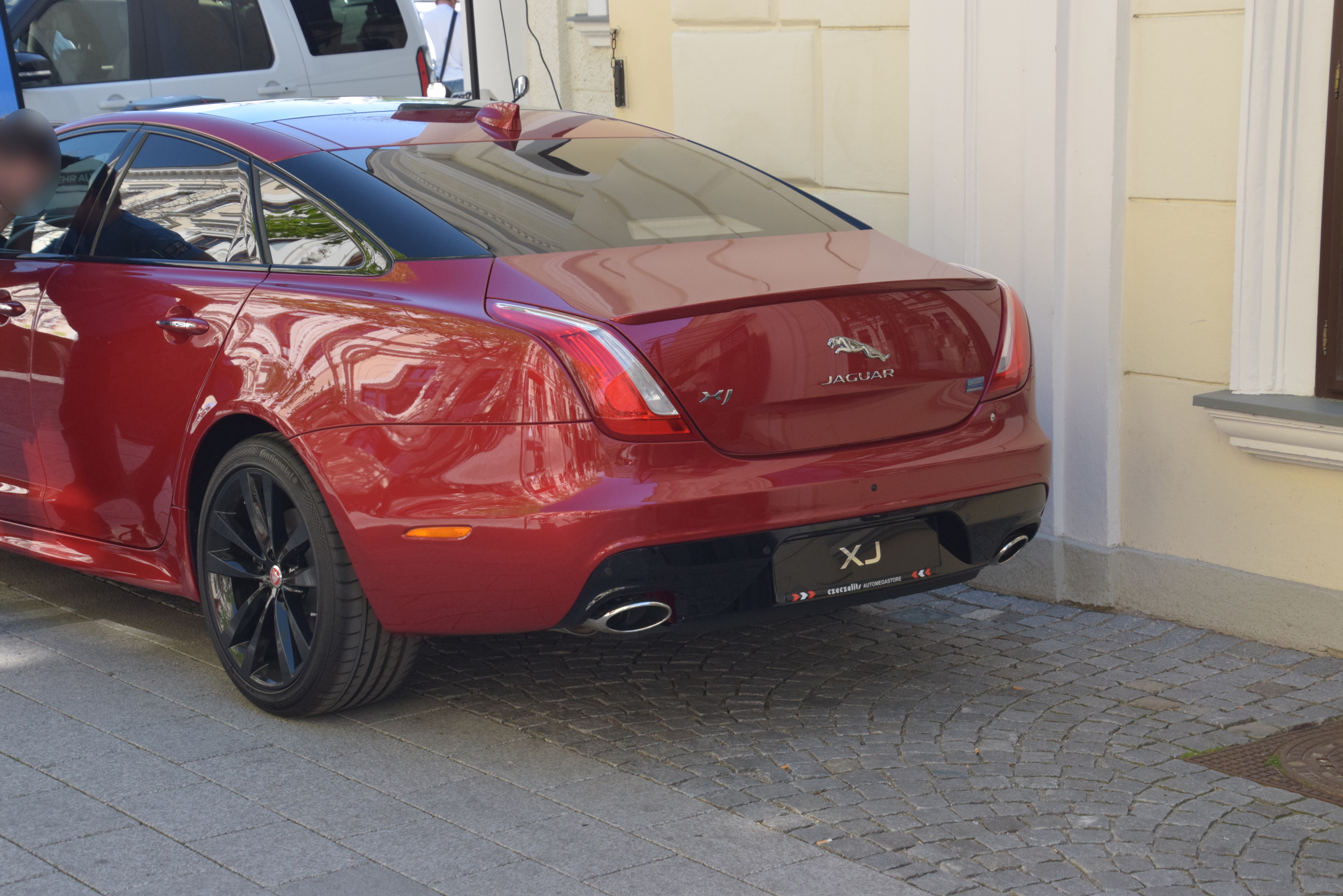
ZF 6-Speed Automatic
The six-speed automatic in earlier XJs uses conventional hydraulic control and a torque converter. Valve-body wear, solenoid operation and converter condition become increasingly relevant as mileage rises.
SPEAK TO A TECHNICIAN NOW 01580 239 610 8am - 5.30pm Mon-Fri
The Jaguar XJ combines substantial vehicle weight and engine torque with ZF automatic transmission technology, so converter load and hydraulic control are particularly important when shift quality begins to change.
Earlier X350/X358 and launch-era X351 models use six-speed automatics on relevant versions, while later X351 cars moved to eight-speed transmission, including high-capacity 8HP70 applications.
XJ transmission technology progresses from six-speed ZF units on X350/X358 and early X351 models to eight-speed automatic across later X351 applications, with 8HP70 hardware used on multiple diesel and high-output petrol versions.
| XJ generation / type | Typical UK versions | Automatic gearbox | What owners often search for |
|---|---|---|---|
| XJ X350/X358, 2003–2009 | V6/V8 petrol and diesel automatic versions | ZF 6-speed automatic on relevant models | XJ 6-speed gearbox fault, converter shudder, delayed Drive |
| XJ X351, 2010–2012 | 3.0 diesel, 5.0 V8 and supercharged versions | Six-speed automatic on relevant launch-era versions | X351 gearbox shudder, harsh shift, valve-body issue |
| XJ X351, 2013–2019 | 3.0 diesel, V6/V8 petrol, selected AWD | ZF 8-speed automatic; 8HP70 documented on multiple applications | XJ 8HP70 repair, gearbox warning, torque converter |
The six-speed automatic in earlier XJs uses conventional hydraulic control and a torque converter. Valve-body wear, solenoid operation and converter condition become increasingly relevant as mileage rises.
Later X351 cars use an eight-speed transmission with closer ratio spacing and more complex clutch control. Accurate pressure regulation and adaptation are essential for the smooth shift quality expected from an XJ.
High-capacity 8HP70 applications handle substantial diesel and V8 torque, so converter, clutch and hard-part condition should be considered under realistic load rather than only during a workshop scan.
XJ searches often centre on 'converter shudder', 'delayed Drive', 'harsh 2-1 shift', 'gearbox restricted performance' and '8HP70 repair'. Those symptoms fit the platform, but the six-/eight-speed generation still determines the most likely hydraulic path.
A soft vibration through the cabin at steady speed can originate from converter lock-up, although propshaft, tyres and differential components can produce an almost identical sensation.
A pause followed by a strong engagement into Drive can indicate slow pressure build-up, valve-body leakage, converter fill or clutch-application wear.
Harsh downshifts may develop when adaptation values compensate for ageing hydraulic components or internal clutch clearances.
RPM flare under acceleration can signal insufficient clutch holding pressure and should be addressed before additional friction damage occurs.
A restricted-performance warning may be triggered by ratio, pressure, sensor or converter faults and needs Jaguar-specific control-module diagnosis.
Because the XJ is refined and well insulated, driveline noise may travel through the body; differential and propshaft faults should be separated from internal gearbox noise.
For an XJ, describe whether the fault is felt through the seat as a cruise-speed vibration, as a thump when selecting Drive or as a harsh shift while slowing. Those distinctions help target converter, hydraulic and driveline testing.
| What you notice | How drivers describe it | Possible areas to investigate |
|---|---|---|
| Delay then thump | “I select Drive and it pauses before engaging.” | Hydraulic pressure, clutch application, valve body, converter fill or seals |
| Shudder at steady speed | “It vibrates gently when cruising.” | Torque-converter lock-up, valve body, driveline or wheel/tyre issue |
| RPM flare | “The revs rise before the next gear catches.” | Internal clutch slip, pressure loss, valve body or worn sealing elements |
| Harsh downshift | “It bangs as I slow down.” | Adaptation, pressure-control solenoid, valve body, mounts or internal wear |
| Whine or hum | “The noise changes with road speed.” | Transmission bearings, differential, propshaft, driveshaft or wheel bearing |
| Warning / limited gears | “The gearbox warning appears and it stops shifting normally.” | Stored TCM DTC, pressure/control fault, sensor data or protection mode |
XJ transmission faults are interpreted with operating temperature, ratio, converter-slip and hydraulic data. High-torque 8HP70 versions should be assessed under the load conditions that actually trigger the complaint.
| Fault code | What it broadly relates to | What may need checking |
|---|---|---|
| P0700 | Transmission control system warning request | Read the Jaguar transmission control module for the underlying gearbox-specific DTCs |
| P0715 | Input / turbine speed sensor circuit | Speed-sensor signal, wiring, control data and internal transmission operation |
| P0730 | Incorrect gear ratio | Commanded versus actual ratio, clutch application, hydraulic pressure and internal wear |
| P0741 | Torque-converter clutch performance on applicable conventional automatics | Converter lock-up, valve body, hydraulic pressure and fluid condition |
| P0796 | Pressure-control solenoid performance / stuck condition | Valve body, solenoid operation, pressure regulation and hydraulic integrity |
XJ engine output and six-/eight-speed generation should be confirmed before a converter or valve body is specified.
XJ repair pricing reflects the size and torque capacity of the transmission, with valve-body and converter repairs below the cost of full six-/eight-speed reconditioning when internal damage is limited.
| Jaguar XJ gearbox work | Typical guide range | What can change the price? |
|---|---|---|
| Diagnostic scan and road test | From £30 | Generation, engine and driveline complexity |
| Valve-body / solenoid repair | Approx. £900 - £1,700 | Hydraulic wear and transmission family |
| Torque-converter related repair | Approx. £1,000 - £1,900+ | Converter condition and removal labour |
| Full conventional automatic / gearbox reconditioning | Approx. £2k - £4.5k+ | Transmission family and internal damage |
| V8 / AWD / high-output transmission work | Diagnosis required | High-torque specification and driveline involvement |
We identify the XJ generation, engine, drivetrain and exact six- or eight-speed ZF unit.
Jaguar-compatible diagnostics are used to inspect pressure, ratio, converter-slip and adaptation information.
The vehicle is road-tested at the load and road speed where the owner notices the problem.
We then define whether the repair is hydraulic, converter-related, internal or connected to the surrounding driveline.
Tell us whether the XJ shudders at cruise, thumps into Drive, flares between gears or shows a restricted-performance warning.
Service4Service South-East provides Jaguar XJ automatic gearbox diagnosis, valve-body and converter repair, and full transmission reconditioning across the South East.
Bespoke vehicle collection and delivery can be discussed for suitable jobs, supported by regional service pages throughout the South-East network.
More Jaguar gearbox guides:
For broader Jaguar transmission information, see our Jaguar gearbox repair page for the South East.
Torque-converter lock-up is one possible cause, but propshaft, differential, tyre and wheel faults can produce a very similar low-frequency vibration.
Hydraulic pressure loss, valve-body wear, converter fill and internal clutch application can all create a pause before the transmission engages.
Yes. Solenoid and hydraulic-control faults can often be repaired or reconditioned once pressure testing confirms the valve body is the source of the problem.
The transmission controller may have detected a ratio, pressure, converter, sensor or internal fault and reduced normal operation to protect the gearbox.
The guide table lists valve-body work around £900–£1,700, converter repair around £1,000–£1,900 and full reconditioning around £2k–£4.5k+.
Yes. Propshaft, differential and mounting faults can transmit vibration or clunks through the cabin and should be checked before internal transmission work.
For an XJ, transmission generation and engine torque should guide converter, valve-body and internal diagnosis before a rebuild is recommended.