ZF 6HP Family
The ZF six-speed units used in earlier Sport models rely on conventional hydraulic control and torque-converter lock-up, making pressure, valve-body and converter condition key diagnostic areas.
SPEAK TO A TECHNICIAN NOW 01580 239 610 8am - 5.30pm Mon-Fri
The Range Rover Sport puts substantial torque through its automatic transmission, particularly when towing, climbing or accelerating hard. Earlier L320 models use ZF six-speed units, while later L320, L494 and current L461 versions move into the eight-speed 8HP family.
That progression changes the likely fault pattern. An older six-speed Sport may show converter or hydraulic wear differently from an L494 8HP70, and a current PHEV or SV adds another layer of powertrain integration.
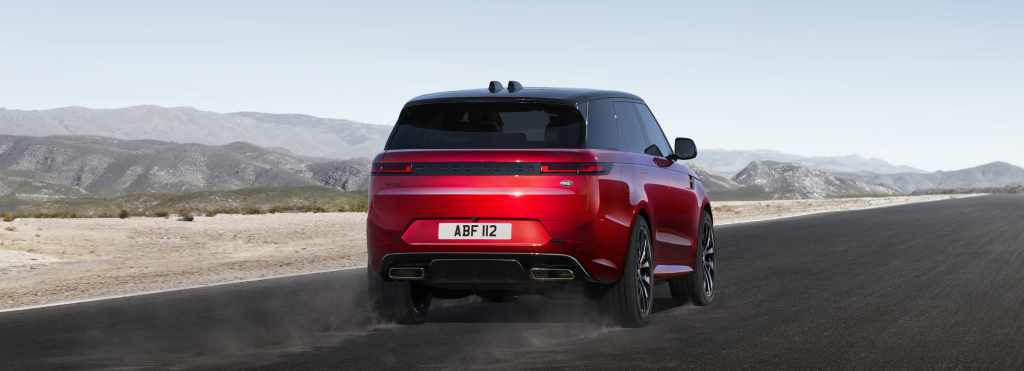
Range Rover Sport transmission history moves from the ZF 6HP family in early L320 models to selected late-L320 and widespread L494 eight-speed applications, with current L461 vehicles continuing eight-speed automatic technology across MHEV, PHEV and high-output versions.
| Range Rover Sport generation / type | Typical UK engines / versions | Automatic gearbox | What owners often search for |
|---|---|---|---|
| L320, 2005–2010 | TDV6, TDV8 and petrol V8 / supercharged V8 | ZF six-speed automatic (6HP family) | Range Rover Sport 6-speed gearbox fault, harsh shift, gearbox slipping |
| L320, 2011–2013 | Later TDV6/SDV6, 4.4 TDV8 and V8 variants | ZF 6HP28 on some versions; ZF 8HP70 eight-speed introduced on selected later powertrains | Sport 6HP28 problems, 8HP70 gearbox repair, torque converter shudder |
| L494, 2013–2022 | SDV6, SDV8, P400e, V8 and SVR | ZF eight-speed automatic / 8HP family; 8HP70 documented on key V6/V8 applications | Range Rover Sport 8HP70 fault, gearbox shudder, harsh downshift |
| L461, 2022–present | MHEV petrol/diesel, PHEV, V8 and SV | Eight-speed automatic; exact high-torque ZF derivative varies by powertrain | New Range Rover Sport gearbox fault, 8-speed warning, Sport SV transmission |
The ZF six-speed units used in earlier Sport models rely on conventional hydraulic control and torque-converter lock-up, making pressure, valve-body and converter condition key diagnostic areas.
ZF 8HP/8HP70 on later models handles higher torque with more ratios and tighter clutch control. Smooth operation depends on stable pressure, converter behaviour and correct adaptation under load.
Current PHEV and SV derivatives add electrified or very high-output powertrains, so gearbox data may need to be considered alongside hybrid, engine and AWD systems.
Sport owners commonly search for 'torque converter shudder', '8HP70 gearbox fault', 'bang into Drive', 'gearbox slipping under load' and 'judder on tight turns'. Towing, road speed and transfer-case behaviour are especially useful clues.
A vibration under light throttle at cruising speed can point towards converter lock-up, but propshaft, tyre and wheel faults can create a similar sensation.
A heavy thump into Drive or Reverse may involve hydraulic pressure, valve-body wear, clutch application, mounts or driveline lash.
RPM flare on a climb or during strong acceleration suggests loss of clutch holding pressure and should be investigated before further internal wear develops.
Whine or hum under load can come from gearbox bearings, transfer case, differential, propshaft or wheel-bearing components.
Judder or binding during tight manoeuvres should be checked against the twin-speed transfer case and AWD driveline before the transmission is stripped.
A gearbox warning or stuck-gear condition may be caused by speed-sensor, mechatronic, ratio or internal faults that force the control system into protection mode.
Range Rover Sport automatic gearbox diagnostics and repair across the South East.
Tell us whether the Sport fault appears while towing, accelerating uphill, cruising lightly or turning tightly at low speed. Load and steering condition can quickly separate converter, internal gearbox and transfer-case symptoms.
| What you notice | How drivers describe it | Possible areas to investigate |
|---|---|---|
| Shudder at cruising speed | “It vibrates under light throttle at 50–70 mph.” | Converter lock-up, valve body, fluid condition, propshaft or wheel/tyre issue |
| Bang into gear | “It engages Drive or Reverse with a thump.” | Hydraulic pressure, valve body, adaptation, mounts or internal clutch application |
| Flare between shifts | “The revs rise before the next gear takes.” | Clutch slip, pressure control, solenoid/valve body or internal wear |
| Whine / hum under load | “There is a drivetrain noise that changes with speed.” | Gearbox bearings, transfer case, differential, propshaft or wheel bearing |
| Judder on tight turns | “It feels like the vehicle is binding when manoeuvring.” | Twin-speed transfer case or AWD driveline before assuming gearbox failure |
| Stuck in one gear | “The warning came on and it stopped changing properly.” | TCM protection mode, speed-sensor plausibility, valve block or internal fault |
Sport DTCs are interpreted with six-/eight-speed generation, speed-sensor plausibility, converter slip, hydraulic pressure and AWD data. High-load faults may only become obvious when the vehicle is tested under the conditions that trigger them.
| Fault code | What it broadly relates to | What may need checking |
|---|---|---|
| P0715-64 | Input/turbine shaft speed sensor A circuit — signal plausibility failure in JLR guidance | TCM adaptation/software, input-speed signal and mechatronic valve block |
| P0700-02 | Transmission control system warning / general signal failure | Underlying TCM DTCs and the transmission condition causing the warning |
| P0730 | Incorrect gear ratio | Clutch application, commanded/actual ratio, hydraulic pressure and internal wear |
| P0741 | Torque-converter clutch performance / stuck off | Converter lock-up, valve body, pressure regulation and fluid condition |
| P0729 | Gear 6 incorrect ratio on applicable diagnostic systems | Ratio monitoring, clutch application, pressure and internal mechanical condition |
L320 six-speed, L494 8HP and current L461 high-output/hybrid versions should be identified before repair decisions are made.
Range Rover Sport repair cost reflects transmission capacity and drivetrain complexity, from valve-body and converter work through six-speed or 8HP reconditioning to PHEV/SV-specific repairs.
| Range Rover Sport gearbox work | Typical guide range | What can change the price? |
|---|---|---|
| Diagnostic scan, road test and initial assessment | From £30 | Depth of testing and whether transfer-case/driveline checks are required |
| Valve-body / solenoid related repair | Approx. £800 - £1,600 | 6HP/8HP variant, solenoids, hydraulic wear and coding |
| ZF six-speed full repair / reconditioning | Approx. £2k - £4k+ | Converter, clutches, valve body and internal hard-part condition |
| ZF 8HP / 8HP70 full repair / reconditioning | Approx. £3k - £4.5k+ | Powertrain torque, internal damage, valve body and converter condition |
| PHEV / SV high-output transmission work | Diagnosis required | Exact transmission derivative, hybrid/performance calibration and failed component |
We confirm Sport generation, engine, transmission family and PHEV/SV or towing specification.
JLR-compatible diagnostics are used to inspect ratio, pressure, converter, speed-sensor and relevant AWD data.
The complaint is reproduced under an appropriate road load or low-speed steering condition where safe.
We then quote the hydraulic, converter, internal or driveline repair supported by the diagnosis.
Tell us whether the Range Rover Sport shudders at cruise, bangs into gear, slips under load, binds on tight turns or shows a gearbox warning.
Service4Service South-East provides Range Rover Sport ZF six-speed and 8HP automatic gearbox diagnosis, converter repair and reconditioning across the South East.
Bespoke collection and delivery can be discussed for suitable vehicles, supported by regional service pages across established South-East gearbox-repair areas.
More Range Rover gearbox guides:
For broader Range Rover transmission information, see our Range Rover gearbox repair page for the South East.
Torque-converter lock-up is one possible cause, but propshaft, tyre, wheel and other driveline faults can create a similar vibration under light throttle.
Hydraulic pressure delay, valve-body wear, clutch application, mounts and driveline lash can all contribute to a heavy engagement.
Yes. Many hydraulic and solenoid faults can be repaired or reconditioned once pressure and diagnostic testing confirms the valve body is responsible.
Transfer-case or AWD driveline faults can cause binding during tight manoeuvres, so these should be checked before assuming the automatic gearbox itself has failed.
Earlier L320 models use ZF 6HP-family automatics, while later Sport generations increasingly use the 8HP family with different hydraulic, clutch and control hardware.
The guide table lists six-speed reconditioning around £2k–£4k and ZF 8HP/8HP70 reconditioning around £3k–£4.5k; PHEV or SV work requires diagnosis.
For a Range Rover Sport fault, identify six-speed or 8HP generation first, then reproduce the problem under realistic load so converter, internal gearbox and AWD causes are separated.