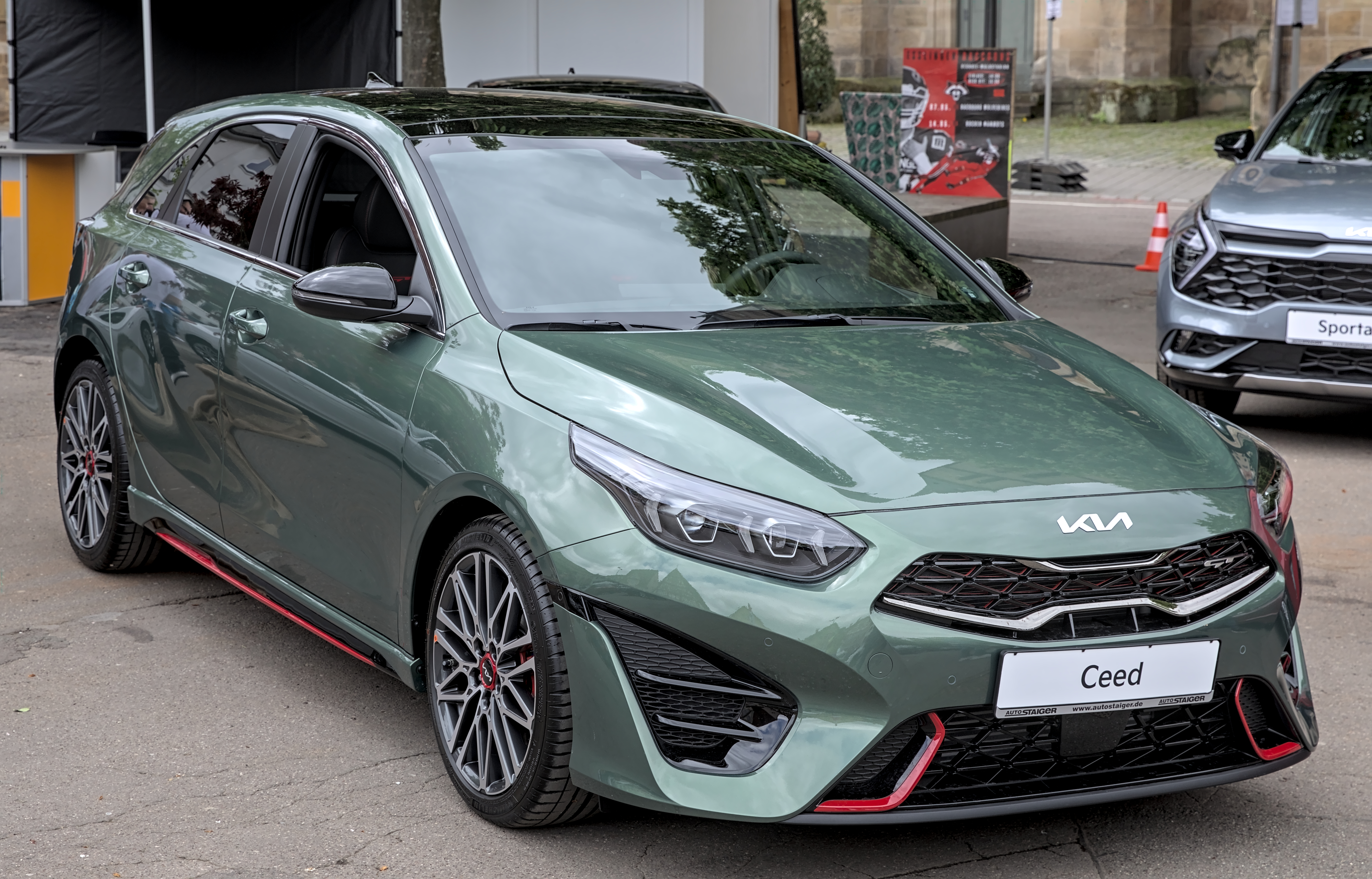
Conventional Automatic
Conventional automatic Ceed versions depend on hydraulic pressure, torque-converter operation and valve-body control. Delayed Drive or rough changes on these cars are assessed differently from DCT symptoms.
SPEAK TO A TECHNICIAN NOW 01580 239 610 8am - 5.30pm Mon-Fri
The Kia Ceed has moved from conventional automatic transmission to widespread seven-speed dual-clutch technology on later turbocharged models. That means a slow engagement on an older Ceed and a low-speed judder on a current 7DCT car should not be approached as the same gearbox fault.
When a Ceed shakes as it moves away, hesitates in traffic, loses smoothness between gears or displays a transmission warning, we first identify the exact gearbox before checking clutch adaptation, actuator control, pressure and internal operation.
Earlier cee’d models used conventional automatic gearboxes, while later JD and current CD generations introduced and then expanded use of seven-speed DCT on relevant engines. Model year and engine therefore determine the correct diagnostic route.
| Ceed generation / type | Typical UK versions | Automatic gearbox | What owners often search for |
|---|---|---|---|
| cee’d ED, 2007–2012 | Selected petrol/diesel automatics | Conventional automatic | cee’d automatic fault, delayed Drive |
| cee’d JD, 2012–2018 | Petrol/diesel automatic derivatives | Conventional auto; later 7DCT on relevant 1.6 CRDi | Ceed DCT judder, clutch fault |
| Ceed CD, 2018–present | 1.4/1.5 T-GDi, 1.6 CRDi/MHEV, GT | 7-speed DCT on relevant versions | Ceed 7DCT repair, actuator fault |
Conventional automatic Ceed versions depend on hydraulic pressure, torque-converter operation and valve-body control. Delayed Drive or rough changes on these cars are assessed differently from DCT symptoms.
The seven-speed DCT uses two clutches with automated control. Pull-away quality, clutch temperature, actuator position and adaptation values become especially important during stop-start driving.
MHEV versions add 48V integration around the powertrain, so a transmission warning may need clutch and DCT data considered alongside the mild-hybrid system.
Ceed owners commonly search for '7DCT judder', 'clutch slipping', 'DCT actuator fault', 'hesitation in traffic' and 'gearbox warning'. Those symptom-led searches are useful, but the clutch and control data determine whether the problem is wear, adaptation or a hydraulic/electronic fault.
Judder while moving away can be linked to worn DCT clutches, adaptation, actuator control or flywheel and mounting movement.
A hesitation before drive takes up may occur when clutch engagement is inconsistent or the control system is not applying the expected pressure.
Harsh changes can develop through clutch wear, actuator behaviour, adaptation errors or internal transmission damage.
A warning message or restricted operation should be scanned through the Kia transmission controller before clutch or mechatronic parts are ordered.
RPM flare under acceleration indicates incomplete torque transfer and can increase clutch temperature and wear if left unresolved.
Whine or vibration can also originate in bearings, driveshafts, mounts or wheel components, so noise location should be established first.
Tell us whether the Ceed fault is worst when reversing, creeping in traffic, pulling away uphill or once the transmission is hot. Those conditions are particularly useful when assessing seven-speed DCT clutch control.
| What you notice | How drivers describe it | Possible areas to investigate |
|---|---|---|
| Judder pulling away | “It shakes as I move off or reverse.” | Clutch pack, adaptation, actuator/mechatronic control, flywheel or mounts |
| Delay then thump | “I select Drive and it pauses before engaging.” | Hydraulic pressure, clutch application, valve body/mechatronic or seals |
| RPM flare | “The revs rise before the next gear catches.” | Clutch slip, pressure loss, converter lock-up or internal wear |
| Harsh downshift | “It bangs as I slow down.” | Adaptation, solenoid/clutch control, mounts or internal wear |
| Whine or hum | “The noise changes with road speed.” | Transmission bearings, differential, driveshaft or wheel bearing |
| Warning / limited gears | “The gearbox warning appears and it stops shifting normally.” | Stored TCM DTC, pressure/control fault, clutch data or protection mode |
Ceed fault codes are interpreted with clutch position, actuator movement, temperature, adaptation and speed data. A generic ratio or pressure code is only one part of the diagnosis.
| Fault code | What it broadly relates to | What may need checking |
|---|---|---|
| P0700 | Transmission control system warning request | Read the Kia transmission control module for the underlying gearbox-specific DTCs |
| P0715 | Input / turbine speed sensor circuit | Speed-sensor signal, wiring, control data and internal transmission operation |
| P0722 | Output speed sensor signal fault | Output-speed signal, wiring, sensor data and transmission control |
| P0730 | Incorrect gear ratio | Commanded versus actual ratio, clutch application, hydraulic pressure and internal wear |
| P0741 | Torque-converter clutch performance on applicable conventional automatics | Converter lock-up, valve body, hydraulic pressure and fluid condition |
Seven-speed DCT and earlier conventional automatic Ceed models require different parts and different test methods.
Ceed repair cost varies from clutch-pack and actuator/mechatronic work through to full DCT reconditioning. MHEV involvement can add diagnostic complexity on later cars.
| Kia Ceed gearbox work | Typical guide range | What can change the price? |
|---|---|---|
| Diagnostic scan and road test | From £30 | Generation and transmission complexity |
| 7DCT clutch-pack repair / replacement | Approx. £900 - £1,600 | Clutch condition, flywheel and adaptations |
| DCT actuator / mechatronic repair | Approx. £700 - £4k+ | Electronic/hydraulic control fault |
| Full conventional automatic / DCT gearbox reconditioning | Approx. £2k - £4.5k+ | Transmission family and internal damage |
| MHEV-integrated transmission work | Diagnosis required | 48V integration and exact failed component |
We confirm Ceed generation, engine and exact conventional automatic or seven-speed DCT.
Kia-compatible diagnostics are used to inspect clutch, actuator, adaptation and transmission-control data.
The problem is reproduced during the low-speed, hot or loaded condition where the driver notices it.
We then quote the clutch, control or internal repair supported by those findings.
Tell us whether the Ceed judders from rest, hesitates in traffic, slips, changes harshly or shows a gearbox warning and include the year/engine if known.
Service4Service South-East provides Kia Ceed conventional automatic and seven-speed DCT diagnosis, repair and reconditioning across the South East.
Bespoke collection and delivery can be discussed for suitable vehicles, with regional service pages supporting customers across established South-East areas.
More Kia gearbox guides:
For broader Kia transmission information, see our Kia gearbox repair page for the South East.
Clutch wear, adaptation, actuator control and flywheel or mounting movement are common areas to investigate when a seven-speed DCT Ceed shakes at low speed.
Delayed engagement, inconsistent shifts, warning messages and difficulty applying one clutch correctly can all occur when actuator or control behaviour is abnormal.
Yes. If the internal transmission is otherwise serviceable, clutch-pack repair or replacement can be carried out as a targeted job.
The guide table lists clutch-pack work around £900–£1,600, actuator/mechatronic repair around £700–£1,500 and full reconditioning around £2k–£4.5k+.
Low-speed DCT clutch control, adaptation, clutch temperature and actuator behaviour can all make hesitation more noticeable during repeated creeping and pull-away.
Driving should be minimised if the revs rise without matching acceleration because repeated clutch slip can generate heat and increase internal wear.
For a Ceed gearbox fault, identify conventional automatic versus seven-speed DCT first and then test the clutch, actuator and control system fitted to that car.