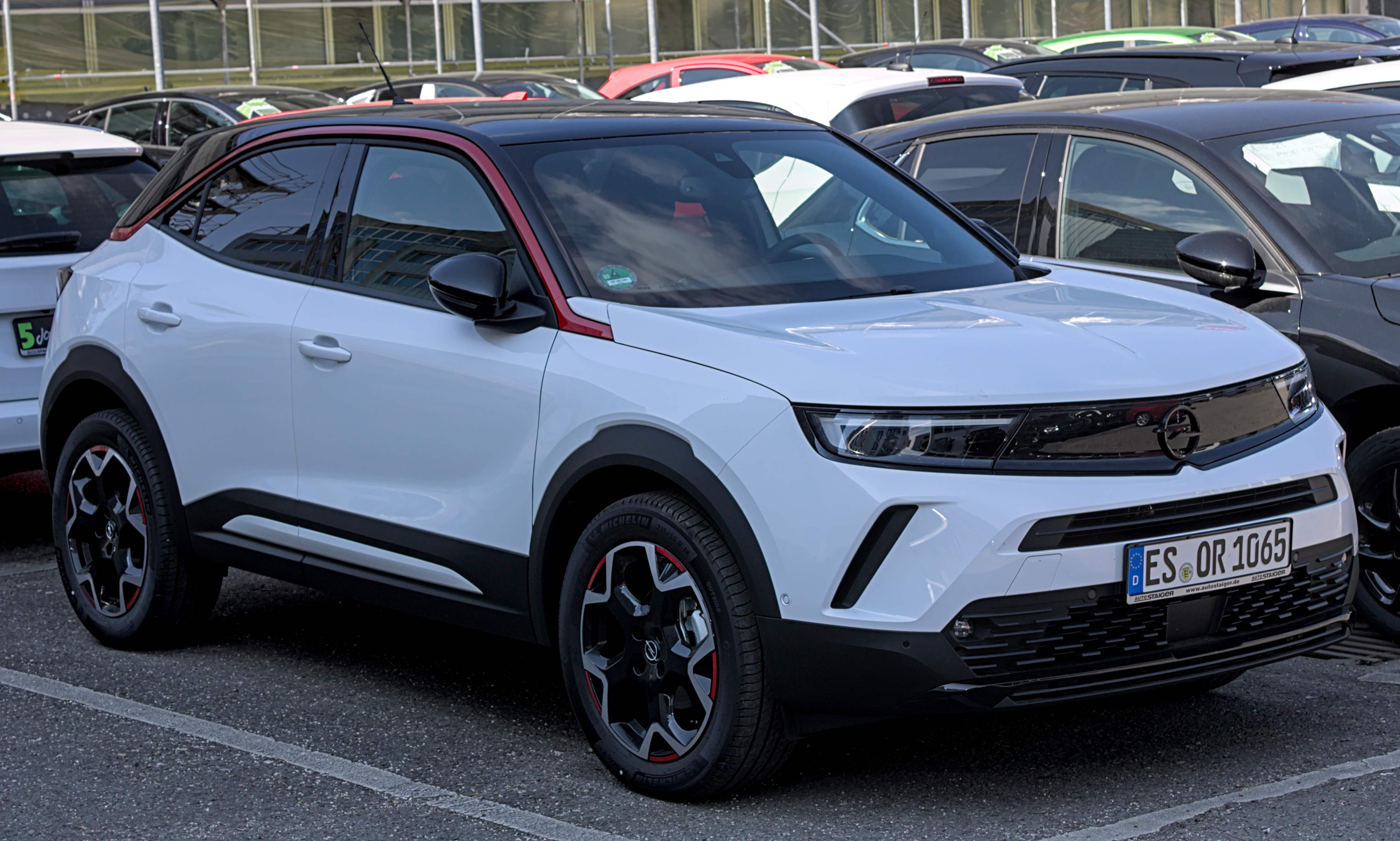
6-Speed Automatic
The earlier six-speed automatic relies on conventional hydraulic pressure, valve-body solenoids and torque-converter operation. Engagement delay and harsh changes are tested through those systems.
SPEAK TO A TECHNICIAN NOW 01580 239 610 8am - 5.30pm Mon-Fri
The Mokka moved from a conventional six-speed automatic in the first generation to an eight-speed automatic on later petrol versions, then added e-DCT6 for the 48V Hybrid. The battery-electric model uses a reduction drive instead of either gearbox.
That means a delayed selection on a Mokka X, a light-throttle shudder on an eight-speed Mokka and low-speed judder on a Hybrid all direct the diagnosis towards different components.
Mokka/Mokka X automatic versions use a conventional six-speed unit, Mokka B petrol automatics use an eight-speed transmission, the 48V Hybrid uses e-DCT6 and Mokka Electric uses a single-speed reduction drive.
| Mokka generation / type | Typical UK versions | Automatic gearbox | What owners often search for |
|---|---|---|---|
| Mokka / Mokka X, 2012–2019 | Petrol/diesel automatic versions | Conventional 6-speed automatic on relevant models | Mokka X automatic fault, harsh shift, delayed Drive |
| Mokka B petrol, 2021–present | 1.2 Turbo 130PS automatic | 8-speed automatic | Mokka 8-speed repair, converter shudder, valve body |
| Mokka Hybrid, 2024–present | 1.2 48V Hybrid | Electrified 6-speed dual-clutch e-DCT6 | Mokka Hybrid gearbox warning, DCT judder |
| Mokka Electric | Battery-electric versions | Single-speed electric reduction drive | Mokka Electric drive-unit fault |
The earlier six-speed automatic relies on conventional hydraulic pressure, valve-body solenoids and torque-converter operation. Engagement delay and harsh changes are tested through those systems.
The later eight-speed petrol automatic adds more ratios and revised control, so converter slip, pressure regulation and adaptation are useful when shift quality changes once warm.
Mokka Hybrid e-DCT6 coordinates two clutches with electric assistance. Smooth pull-away therefore depends on clutch condition, actuator control, learning values and hybrid torque delivery.
Mokka owners commonly search for 'Mokka X delayed Drive', '8-speed shudder', 'valve body problem', 'Hybrid DCT judder' and 'gearbox warning'. The model year quickly tells us whether converter hydraulics or e-DCT clutch control should lead the investigation.
A Mokka Hybrid can vibrate from rest if clutch engagement, actuator movement or hybrid torque blending is not smooth.
On six- or eight-speed conventional automatics, delayed Drive may result from pressure loss, valve-body response, converter fill or clutch application.
A light-throttle shudder on the eight-speed can involve converter lock-up, although drivetrain and wheel-related vibration must be excluded.
A harsh lower-gear shift may be influenced by adaptation, solenoid performance, valve-body control or internal wear.
A transmission or Hybrid warning should be scanned through the relevant modules before assuming the complete gearbox needs replacement.
Road-speed whine can come from transmission or final-drive bearings, but wheel bearings and tyres remain important alternative sources.
Tell us whether the Mokka symptom occurs during the first Drive engagement, at a fixed cruising speed, after warming up or while the Hybrid changes torque source. The event helps decide which system to monitor.
| What you notice | How drivers describe it | Possible areas to investigate |
|---|---|---|
| Judder pulling away | “It shakes as I move off or reverse.” | DCT clutch/actuator, conventional-auto clutch application, mounts or hybrid transition |
| Delay then engage | “I select Drive and it pauses before moving.” | Hydraulic pressure, clutch application, valve body or DCT control |
| RPM flare | “The revs rise without matching acceleration.” | Clutch slip, hydraulic pressure, CVT ratio control or internal wear |
| Harsh low-speed shift | “It jerks between the lower gears.” | Adaptation, valve body, DCT control or mounts |
| Whine / hum | “The noise changes with speed.” | Transmission/CVT bearings, differential, electric drive or wheel bearing |
| Warning / reduced power | “The gearbox or hybrid warning appears.” | Stored TCM/hybrid DTC, pressure/control fault or protection mode |
Mokka DTCs are interpreted according to six-speed, eight-speed or e-DCT6 architecture, with hydraulic, converter, clutch and hybrid data matched to the actual vehicle.
| Fault code | What it broadly relates to | What may need checking |
|---|---|---|
| P0700 | Transmission control system warning request | Read the Vauxhall transmission/hybrid control modules for the underlying DTCs |
| P0715 | Input / turbine speed sensor circuit | Speed-sensor signal, wiring and transmission control data |
| P0730 | Incorrect gear ratio | Clutch application, CVT ratio control, hydraulic pressure or internal wear |
| P0741 | Torque-converter clutch performance where applicable | Converter lock-up, valve body, pressure and fluid condition on conventional automatic versions |
| P17xx family | Manufacturer-specific transmission / clutch-control faults | Vauxhall/Stellantis-specific TCM, DCT clutch/actuator or hybrid-transmission data |
Mokka Electric uses a reduction drive and should not be diagnosed with conventional automatic or Hybrid e-DCT fault logic.
Mokka repair costs depend on conventional valve-body/converter condition, e-DCT clutch and actuator faults, internal reconditioning or separate Electric drive-unit work.
| Vauxhall Mokka gearbox work | Typical guide range | What can change the price? |
|---|---|---|
| Diagnostic scan and road test | From £30 | 6-/8-speed, Hybrid or Electric complexity |
| Valve-body / converter repair | Approx. £800 - £1,700 | Conventional automatic and failed component |
| e-DCT6 clutch / actuator repair | Approx. £900 - £1,700+ | Hybrid clutch/control condition |
| Full conventional automatic / DCT gearbox reconditioning | Approx. £2k - £4.5k+ | Transmission family and internal damage |
| Electric drive-unit work | Diagnosis required | Motor/reduction-drive involvement |
We confirm Mokka generation, engine and conventional automatic, e-DCT6 or Electric specification.
Vauxhall diagnostics are used to review hydraulic pressure, converter, clutch, ratio and Hybrid/EV information as relevant.
The symptom is reproduced during the engagement, cruising or low-speed condition where it appears.
We then quote the hydraulic, converter, clutch or internal repair that the diagnosis supports.
Tell us whether your Mokka delays into Drive, shudders at cruise, judders in Hybrid mode, changes harshly or displays a gearbox warning.
Service4Service South-East provides Vauxhall Mokka six-speed, eight-speed and Hybrid e-DCT diagnosis and repair across the South East.
Bespoke collection and delivery may be available for suitable vehicles, with regional service pages supporting gearbox customers throughout the area.
More Vauxhall gearbox guides:
For broader Vauxhall transmission information, see our Vauxhall gearbox repair page for the South East.
On six- and eight-speed automatics, hydraulic pressure, valve-body response, converter fill and internal clutch application can all cause delayed engagement.
Torque-converter lock-up is one possible cause, but tyres, wheels, driveshafts and other driveline components can produce a similar vibration.
Clutch take-up, actuator position, adaptation and the coordination of electric and engine torque are important areas on the e-DCT6 system.
Yes. Many hydraulic and solenoid faults can be repaired or reconditioned once pressure testing confirms the valve body is the source.
The guide table lists full conventional automatic or DCT reconditioning around £2k–£4.5k+, depending on transmission type and internal damage.
It uses an electric motor with a single-speed reduction drive rather than the six- or eight-speed automatic or Hybrid e-DCT.
For a Mokka gearbox complaint, identify six-speed, eight-speed, Hybrid e-DCT6 or Electric first and then test the system that matches the powertrain.